

Helium Gas (He)
Helium Gas (He) – Ultra-Light, Ultra-Cold, Ultra-Pure. Phoenix Gases supplies Helium in both gaseous and liquid forms, supporting critical cooling, leak detection, and analytical needs. Our high-purity Helium keeps MRI machines running and analytical labs precise. Get in touch for dependable Helium gas supply – from small cylinders to bulk liquid Helium – backed by Phoenix Gases’ expertise.
Product Description & Use Cases
Helium is a unique element with exceptional properties: it is inert, has the lowest boiling point of any substance (–269°C), high thermal conductivity, and a tiny atomic size. These make Helium indispensable in advanced technology and research. Phoenix Gases sources Helium from reputable cryogenic production facilities, delivering it in pure form for various uses.
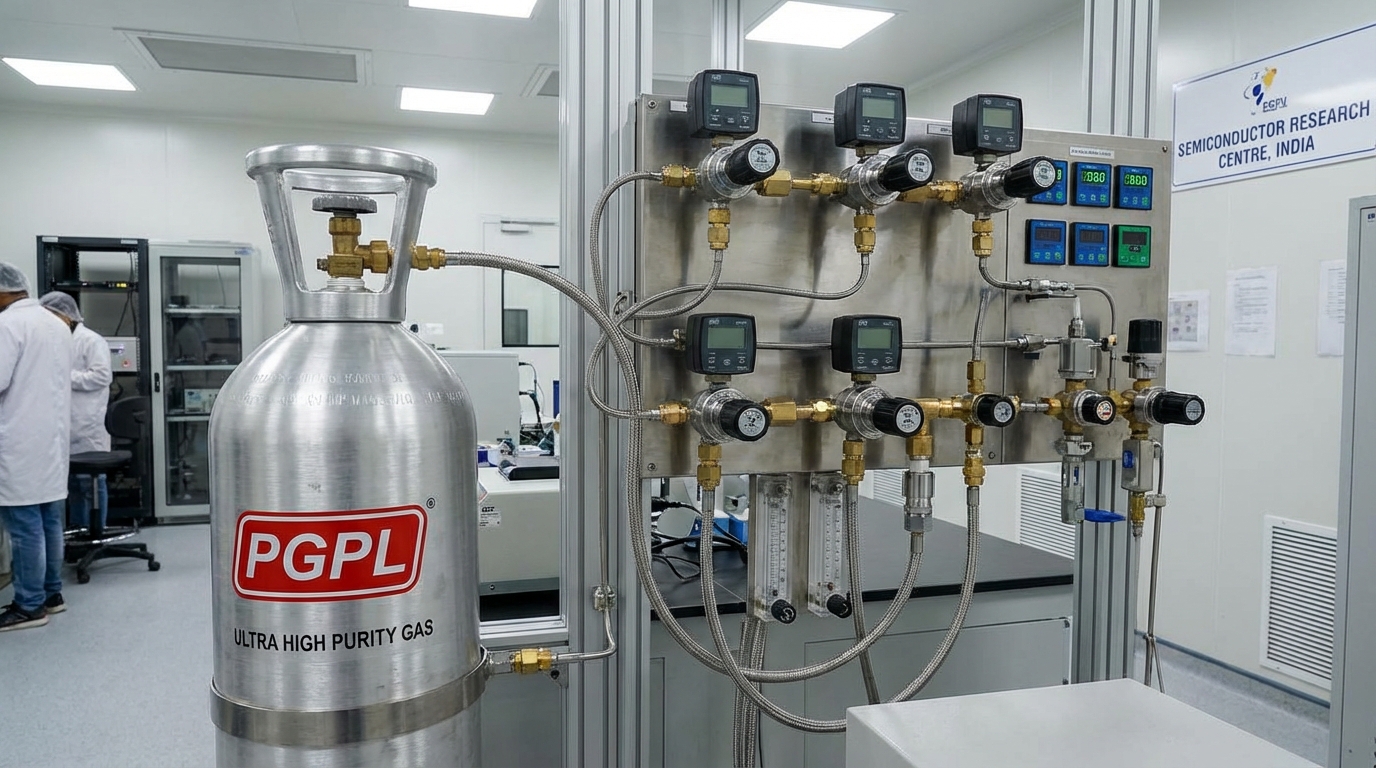
01 Critical Cryogenic Cooling
Helium, especially liquid Helium, is the coolant of choice for superconducting magnets in MRI scanners and NMR spectrometers. Its extremely low boiling point allows it to maintain the magnets at ~4 K. Many research labs and quantum computing projects also rely on liquid helium for cooling sensitive equipment.
02 Leak Detection
Gaseous Helium is the industry-standard tracer gas for detecting small leaks. Because helium atoms are so small and diffuse quickly, they escape through the tiniest leaks. Industries from aerospace to HVAC use helium leak testing – pressurizing a system with helium and using a mass spectrometer to sniff for escaping helium – to ensure systems are leak-tight.
03 Analytical Chemistry
Helium is often used as an Ultra High Purity (UHP) carrier gas in Gas Chromatography (though hydrogen and nitrogen are alternatives). Its inertness and broad compatibility make it ideal for GC and GC-MS systems where purity is paramount. Helium’s high diffusivity also improves resolution in chromatography.
04 Pressurization & Purging
The aerospace industry uses Helium to pressurize rocket fuel tanks because it’s inert and won’t freeze at cryogenic liquid-fuel temperatures. Helium is also used to purge and inert fuel lines and sensitive welding environments (such as titanium or nuclear piping welding) to eliminate oxygen.
05 Controlled Atmospheres & Electronicst
Helium creates protective atmospheres for growing silicon and germanium crystals in semiconductor manufacturing. Its high thermal conductivity and inertness help in fiber optic manufacturing and plasma cutting as well. Helium-neon lasers (described under Neon) also use Helium as a buffer gas for optimal laser operation.
Phoenix Gases offers Helium in multiple forms to meet your needs:
Packaging & Supply Options
Compressed Helium Gas Cylinders
We provide Helium gas in standard high-pressure cylinders (typically containing ~8 m³ of Helium at 200 bar). For analytical/UHP Helium, we supply it in deoxygenated, batch-certified cylinders with brass or stainless steel diaphragm valves to preserve purity. Cylinder sizes range from small 1 m³ cylinders for lab use up to large K-size (50 L) cylinders. We also offer multi-cylinder packs (12–16 cylinder cradles) for high-volume industrial users.
Liquid Helium Dewars
For cryogenic applications, we supply liquid Helium in specialized dewars (100–250 liters). Our dewars are vacuum-insulated and come with transfiller equipment if needed. We coordinate closely on liquid helium deliveries due to the product’s boil-off rate – ensuring it arrives and is transferred efficiently to your system.
Balloon Helium
If you require Helium for balloons or similar uses, we offer commercial grade Helium in convenient cylinder rentals, complete with regulators for filling balloons. (This is a lower purity typically, reserved for lifting applications.)
Bulk & Tube Trailers
For very large gaseous Helium needs, we can arrange tube trailer deliveries. Given Helium’s worldwide supply considerations, we work on contract basis for bulk Helium to ensure availability. Bulk gaseous Helium can be supplied at ~99.99% purity or higher depending on requirement.
All Helium deliveries come with proper labeling (UN1046 for compressed helium, UN1963 for liquid helium) and our team provides guidance on safe handling – e.g., use of proper vent lines for liquid helium dewars to avoid pressure build-up. We also offer cylinder manifold systems if you need a continuous Helium gas supply without interruption.
Compliance & Purity Details
Our Helium gas meets stringent purity standards for scientific and industrial use. Typical grades include:
Research/Instrument Grade: 99.999% purity Helium (UHP 5.0). Impurities like oxygen, nitrogen, moisture are kept below 1–3 ppm. Each UHP Helium cylinder can come with a certificate of analysis. This grade is recommended for GC carrier gas, NMR, and other critical applications.
Industrial Grade: 99.99% purity Helium, suitable for purge, pressurization, and leak detection in most industrial settings. Cost-effective for general use.
Balloon Grade: ~98% purity Helium (balance being air). We typically do not stock lower purities unless for balloon customers, as most industries demand higher purity.

Phoenix Gases ensures compliance with all relevant standards for medical or food uses of Helium as well. (While Helium isn’t breathed except in diving mixtures, we can supply medical-grade Helium if needed, e.g. Helium-Oxygen mixtures for respiratory treatments.) Our facilities operate under ISO 9001 and we maintain proper FDA registrations for medical gases. We also follow BCGA and CGA guidelines for cylinder handling and transport. Helium is a finite resource, so our quality control also means efficient usage – we help customers with helium recycling systems for MRI and other systems to minimize waste.
Ordering & Process
Our Ordering Process
01
Needs Assessment

Contact Phoenix Gases with your helium requirements. Because helium can be in short supply globally, we often work out a supply schedule or contract for continuous needs (especially for liquid helium or bulk gas users). We’ll discuss your usage pattern (one-time project, daily consumption, etc.) and purity needed.
02
Quotation
Based on your needs, we provide pricing and terms. For liquid helium, pricing and delivery logistics (dewars return, etc.) will be detailed. For gaseous helium, we clarify cylinder rental vs. purchase options and provide a quote per cylinder or per m³.
03
Supply Agreement

Once the order is confirmed, we schedule your helium production allocation. For new bulk customers, an initial delivery timeline will be set to possibly install or prep any on-site equipment (like a liquid dewar or gas manifold).
04
Delivery & Replenishment

Our team delivers the helium in the agreed format. For recurring needs, we set up a regular delivery route or on-call system. We also handle empty cylinder pickup and refilling logistics seamlessly, so you always have helium on hand. Phoenix Gases provides 24/7 emergency support for critical helium users (such as hospitals with MRI machines) – if you have a sudden helium need or equipment issue, we are there to assist.
B2B Conversion – Secure Your Helium Supply with Phoenix Gases
From ensuring MRI machines stay cold to pinpointing leaks in spacecraft, Helium is irreplaceable – and so is a reliable supplier. Phoenix Gases has decades of experience navigating the helium supply chain to guarantee our customers get the helium they need, when they need it. Partner with us for personalized service, technical know-how, and peace of mind for all your helium requirements. Contact Phoenix Gases today to discuss a Helium supply solution tailored to your operations.

FAQ
FAQs about Helium Gas
Do you supply liquid helium as well as helium gas?
Yes, we do. Phoenix Gases is equipped to supply both gaseous helium and liquid helium. We provide liquid helium in cryogenic dewars for applications like MRI magnet cooling and scientific research. For gaseous helium, we offer high-pressure cylinders and even bulk tube trailers. When you contact us, let us know which form you need. We often supply some customers with both (e.g., an MRI facility might get liquid helium for their magnet and gaseous helium cylinders for leak checking the system).
What purity of helium is required for GC and NMR?
For Gas Chromatography (GC) carrier gas and NMR instruments, you should use UHP Helium (99.999%). This grade has extremely low impurity levels to avoid ghost peaks or interference. Phoenix Gases’ UHP helium is specifically processed and analyzed for these critical applications. Using lower purity can introduce oxygen or moisture that damages columns or affects superconducting magnets, so we ensure you get the top purity for these uses.
Is there a helium shortage and how can Phoenix Gases ensure my supply?
Helium is a finite resource and global shortages have occurred, but Phoenix Gases works through long-term sourcing contracts to maintain supply for our customers. We advise customers to forecast helium needs in advance so we can allocate resources. In times of tight supply, priority is given to critical users (medical, research) and contract customers. By partnering with Phoenix Gases under a supply agreement, you can secure helium availability even during market shortages. We also help with efficiency – for example, providing gas capture equipment to recycle helium from your processes where possible.
How do I handle helium cylinders and liquid helium safely?
Handling helium gas cylinders is similar to other inert gas cylinders: secure them upright, use the correct regulator (CGA 580), and do not drop or damage the cylinder. Helium itself is not toxic or flammable – the main risk is asphyxiation in a confined space if a large amount is released, so use in ventilated areas. Liquid helium requires special precautions: it’s extremely cold. Use insulated gloves and face protection when transferring liquid helium to avoid cryogenic burns. Ensure the dewar’s pressure-relief valve is functioning – never trap liquid helium in a closed system without a vent, as it expands massively when evaporating. Phoenix Gases provides guidance on handling and will assist you during delivery of liquid helium to make sure it’s done safely.
Looking for a Helium Gas?
Our experts can help you select the right gas, purity level, and packaging for your application.