

Phoenix Marino
Portable calibration cans for marine detectors and shipboard safety routines
Phoenix Marino by Phoenix Gases is a portable, disposable calibration gas range built for marine gas detection programs. It supports quick bump tests, routine calibration, and safety verification on vessels and offshore environments. Designed for field convenience, Phoenix Marino helps crews maintain detector accuracy, reduce downtime, and stay audit ready with consistent mixtures and clear documentation.
Phoenix Marino 120
Phoenix Marino 120 is a higher capacity disposable canister format suited for routine shipboard testing programs. The 1.6L aluminium canister with 75 bar filling pressure supports repeated bump tests and calibration cycles, making it ideal for safety officers and marine maintenance teams working across multiple detector units.
Phoenix Marino 50
Phoenix Marino 50 is a compact, convenient format for frequent on deck checks and regular detector verification. The 0.5L aluminium canister with 100 bar pressure helps deliver reliable test gas flow during calibration routines. It is a practical choice for vessels that need portability with good usage frequency.
Phoenix Marino 20
Phoenix Marino 20 is a field friendly option for quick safety verification and limited usage scenarios. The 1L aluminium canister with 20 bar pressure is designed for simple onboard handling where smaller volume requirements apply. It suits quick bump tests for portable detectors during inspections and confined space preparation.
Phoenix Marino Portable Calibration Range
Choose the right can size and pressure for your onboard testing frequency and detector type.
Phoenix Gases supports Phoenix Marino supply planning based on your vessel type, detector count, and routine schedule. If you are unsure which format fits your onboard requirements, share your detector model and testing frequency. Our team will recommend the most suitable can size and mixture options to keep your safety checks consistent and reliable.
Why Marine Calibration Matters
Marine environments demand dependable gas detection performance because conditions can change quickly in engine rooms, cargo areas, and confined spaces. Calibration and bump testing help confirm that detector sensors respond correctly before work begins. Phoenix Marino makes these routines easier with portable disposable cans, stable mixtures, and clear identification, allowing crews to perform safety verification without complex setup delays.

Built for onboard safety routines where rapid verification and confidence in readings are critical.
Ideal Applications for Phoenix Marino
Confined Space Entry on Vessels
Before entry into tanks, voids, and enclosed compartments, detectors must be verified to prevent false safe readings. Phoenix Marino supports quick bump testing and calibration, helping safety officers validate response to target gases. This improves readiness, reduces entry delays, and supports safer procedures during shipboard operations.
Engine Rooms and Machinery Spaces
Engine rooms can present complex gas risks depending on fuel systems, ventilation, and maintenance activity. Phoenix Marino enables routine verification of portable gas detectors used by engineers and technicians. By supporting dependable sensor response checks, it helps reduce the risk of missed alarms and strengthens daily safety routines.
Cargo Holds and Chemical Handling Areas
On vessels handling sensitive cargo or chemicals, accurate detection is essential for leak response and work planning. Phoenix Marino supports dependable test gas routines that validate detector performance before inspections or loading activities. This helps teams maintain monitoring confidence and supports safer decisions during operational tasks.
Routine Safety Audits and Compliance Readiness
Marine companies often follow documented safety procedures that require detector verification records. Phoenix Marino supports consistent testing routines using standard mixtures and predictable packaging formats. This helps teams stay audit ready, maintain internal safety logs, and reduce operational uncertainty during inspections and compliance reviews.
Designed for practical marine workflows where safety checks must be quick, repeatable, and documented.
Safety Officers and Ship Management Teams : Ship safety teams need portable calibration options that can be used without delays or complex equipment. Phoenix Marino supports repeatable bump test routines and calibration checks for multiple detectors onboard. This helps maintain consistency across shifts and supports better safety readiness on vessels operating across long routes.
Marine Service Contractors and Inspection Teams : Third party inspectors and service providers often require quick detector verification during visits. Phoenix Marino makes it easier to carry disposable calibration cans onboard and complete checks without waiting for heavy cylinder arrangements. It reduces time spent on setup and helps ensure detectors are confirmed before work begins.
Offshore Worksites and Marine Maintenance Crews : Offshore environments require dependable field calibration options due to access constraints and time pressure. Phoenix Marino supports safety routines during maintenance work, inspection tasks, and emergency readiness checks. It gives crews a practical way to confirm sensor response and maintain confidence in readings across marine conditions.
Emergency Response Preparedness : During incident readiness, gas detectors must be trusted. Phoenix Marino supports routine verification that helps identify detector issues early. When emergency response equipment is maintained with consistent testing programs, teams can react faster and rely on detector alarms when it matters most.
Buyer Focused Marine Use Cases
Certificate Accuracy Support
Phoenix Marino calibration mixtures are supplied with certification that supports dependable calibration routines. Certificate accuracy helps teams verify that test gas concentration values are within defined limits, improving confidence during bump tests, routine checks, and documentation requirements.
Shelf Life and Stability Guidance
Shelf life varies depending on gas composition, whether reactive or non reactive, and storage conditions. Phoenix Gases supports customers with clear shelf life information and safe storage guidance, helping crews plan usage and maintain reliability across onboard schedules.
Reactive and Non Reactive Options
Marine detection requirements can include reactive components and common combustible or toxic gases. Phoenix Marino supports a practical selection of reactive and non reactive mixtures so customers can align the supply to detector configuration, monitoring needs, and onboard procedures.
Packaging Identification and Safety Handling
Clear identification, labeling, and safe handling practices matter in marine environments. Phoenix Gases supports proper packaging information and customer guidance so onboard teams can store and use calibration cans safely, especially in areas where ventilation and access limitations exist.
Compliance and Quality Standards
Documentation and consistency that supports safer marine calibration routines.
Phoenix Gases focuses on practical supply reliability, documentation, and repeatable calibration support for marine customers. Our goal is to help your crew run detector verification routines confidently and consistently. If you need help matching mixtures to detector requirements, share your detector details and intended application. We will guide the best selection for onboard safety checks and compliance readiness.
Key Features and Benefits
Portable disposable cans designed to simplify marine detector verification and reduce operational delays.
01Portable and Easy to Deploy Onboard
Phoenix Marino is designed for shipboard workflows where quick checks matter. The disposable can format supports easier handling compared to large cylinder setups, making it suitable for safety officers and crews. This improves readiness for inspections, confined space work, and routine checks without slowing down operations.
02Consistent Formats for Repeatable Testing Programs
Marine safety programs rely on consistency across crew shifts and vessel schedules. Phoenix Marino provides predictable can formats and dependable mixture supply to support repeatable bump test and calibration routines. This helps reduce confusion, improves documentation quality, and builds confidence in detector performance over time.
03Supports Compliance and Audit Readiness
Marine compliance often requires documented safety routines and evidence of detector verification. Phoenix Marino helps simplify these routines by providing stable mixtures and practical supply formats. It supports consistent internal logs and helps teams demonstrate readiness during audits, inspections, and safety reviews.
Choose the right size and pressure option to match your onboard usage and storage needs.
Packaging and Supply Formats
Marino 120 Format
A higher capacity can format suitable for repeated testing routines and multiple detector units. This option supports regular bump tests and calibration schedules and is commonly chosen when vessels plan structured safety verification programs across longer voyages.
Marino 50 Format
A compact format that balances portability and usage frequency. This option works well for regular onboard checks where teams need a manageable can size that still supports consistent testing across routine safety inspections and maintenance cycles.
Marino 20 Format
A field friendly option for quick checks and limited usage patterns. This format is useful when testing requirements are less frequent or when teams need a smaller supply option for specific onboard inspection routines and targeted safety preparations.
All Phoenix Marino cans are supplied in a consistent disposable format intended for practical field use. Storage and handling guidance is important onboard, especially in spaces with limited ventilation. Phoenix Gases supports customers with clear packaging identification and routine planning advice so your crew can use calibration cans safely, maintain detector confidence, and plan reorder cycles without surprises.
Common Available Mixtures
- Single gas options
- multi gas blends
- combustible detector mixes
- toxic gas mixes
- oxygen related mixes
- common balance gas combinations
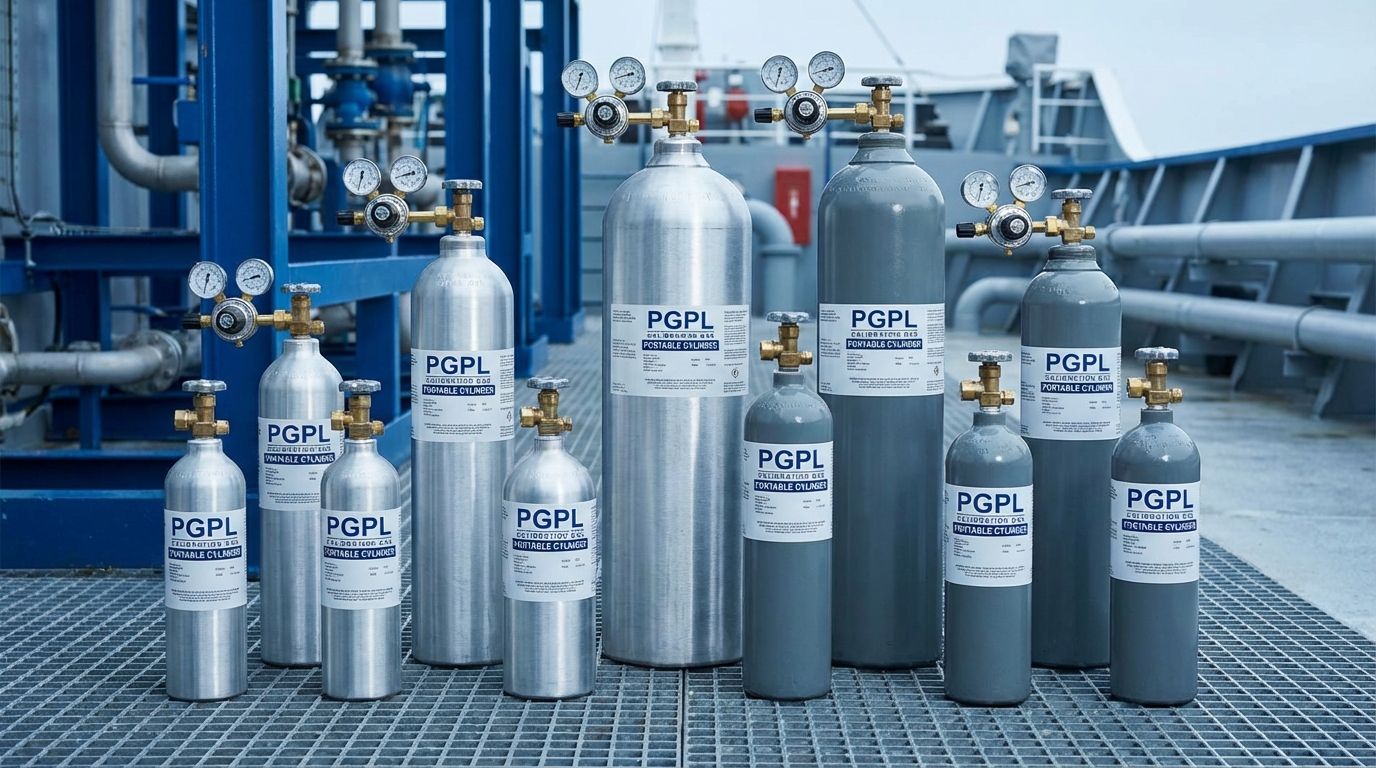
Standard Gas List for Phoenix Marino
Browse the complete standard list and select the required mixture for your detector and application.
| No. | Type of Gas | Unit | Reactive / Non Reactive | Gas Composition | Gas Content 120 Ltr |
Pressure in Bar |
Gas Content 50 Ltr |
Pressure in Bar |
Certificate Accuracy | Shelf Life |
|---|---|---|---|---|---|---|---|---|---|---|
| 1 | Guard Gas | % / ppm | Reactive |
10/25/50 Hydrogen sulfide (H2S) 50/100/300 ppm Carbon Monoxide (CO) 20/25/50 LEL Methane (CH4) Balance Nitrogen (N2) |
120 | 75 | 50 | 100 | 2% | 24 Months |
| 2 | Guard Gas | % / ppm | Reactive |
10/25/50 Hydrogen sulfide (H2S) 50/100/300 ppm Carbon Monoxide (CO) 20/25/50 LEL Methane (CH4) Balance Nitrogen (N2) |
120 | 75 | 50 | 100 | 2% | 24 Months |
| 3 | H2S | ppm | Reactive | 10/25/50/75/100/200 ppm Hydrogen sulfide (H2S) Balance Nitrogen (N2) / Air | 120 | 75 | 50 | 100 | 2% | 24 Months |
| 4 | NO | ppm | Reactive | 25/50/100/500 ppm Nitric Oxide (NO) Balance Nitrogen (N2) | 120 | 75 | 50 | 100 | 2% | 24 Months |
| 5 | NO2 | ppm | Reactive | 25/50/100/500 ppm Nitrogen Dioxide (NO2) Balance Nitrogen (N2) / Air | 120 | 75 | 50 | 100 | 2% | 12 Months |
| 6 | SO2 | ppm | Reactive | 20/25/50/100/500 ppm Sulfur dioxide (SO2) Balance Nitrogen (N2) / Air | 120 | 75 | 50 | 100 | 2% | 24 Months |
| 7 | CL2 | ppm | Reactive | 10/20 ppm Chlorine (CL2) Balance Nitrogen (N2) / Air | 120 | 75 | 50 | 100 | 2% | 6 Months |
| 8 | NH3 | ppm | Reactive | 25/50/100/500 ppm Ammonia (NH3) Balance Nitrogen (N2) / Air | 120 | 75 | 50 | 100 | 2% | 12 Months |
| 9 | Air | % | Non Reactive | 99.999 % Zero Air (20.9 % Oxygen O2) Balance Nitrogen (N2) | 120 | 75 | 50 | 100 | 2% | 36 Months |
| 10 | N2 | % | Non Reactive | 99.999 % Nitrogen (N2) | 120 | 75 | 50 | 100 | 2% | 36 Months |
| 11 | LEL | % | Non Reactive | 10/20/25/30/50 % LEL Methane (CH4) Balance Air | 120 | 75 | 50 | 100 | 2% | 36 Months |
| 12 | LEL | % | Non Reactive | 20/25/50 % LEL Ethylene (C2H4) Balance Air | 120 | 75 | 50 | 100 | 2% | 36 Months |
| 13 | LEL | % | Non Reactive | 20/25/30/50 % LEL Propane (C3H8) Balance Air | 120 | 75 | 50 | 100 | 2% | 36 Months |
| 14 | LEL | % | Non Reactive | 20/25/50 % LEL Hydrogen (H2) Balance Air | 120 | 75 | 50 | 100 | 2% | 36 Months |
| 15 | LEL | % | Non Reactive | 25/50 % LEL Iso Butane (i-C4H10) Balance Air | 120 | 75 | 50 | 100 | 2% | 36 Months |
| 16 | LEL | % | Non Reactive | 25/50 % LEL N-Butane (n-C4H10) Balance Air | 120 | 75 | 50 | 100 | 2% | 36 Months |
| 17 | LEL | % | Non Reactive | 7/10/25/50 % LEL Pentane (C5H12) Balance Air | 120 | 75 | 50 | 100 | 2% | 36 Months |
| 18 | O2 | % | Non Reactive | 5/10/12/18/25 Vol % Oxygen (O2) Balance Nitrogen (N2) | 120 | 75 | 50 | 100 | 2% | 36 Months |
| 19 | CH4 | % | Non Reactive | 1.5/10/15/25/50 Vol % Methane (CH4) Balance Nitrogen (N2) | 120 | 75 | 50 | 100 | 2% | 36 Months |
| 20 | CO | ppm | Non Reactive | 10/25/50/100/500/1000 ppm Carbon monoxide (CO) Balance Nitrogen (N2) / Air | 120 | 75 | 50 | 100 | 2% | 36 Months |
| 21 | CO2 | % | Non Reactive | 1/2/5/10/20/25 Vol % Carbon Dioxide (CO2) Balance Nitrogen (N2) | 120 | 75 | 50 | 100 | 2% | 36 Months |
| 22 | C4H10/CO2 | % | Non Reactive | 8 % Butane (C4H10), 13.8 % Carbon Dioxide (CO2) Balance Nitrogen (N2) | 20 | 20 | - | - | 2% | 36 Months |
| 23 | I-C4H10 | % | Non Reactive | 8 % / 10 % Vol Iso-Butane (i-C4H10) Balance Nitrogen (N2) | 22 | 22 | - | - | 2% | 36 Months |
| 24 | CH4 | ppm | Non Reactive | 25/50/100/500/1000 ppm Methane (CH4) Balance Nitrogen (N2) / Air | 120 | 75 | 50 | 100 | 2% | 36 Months |
| 25 | C2H4 | ppm | Non Reactive | 25/50/100/500/1000 ppm Ethylene (C2H4) Balance Nitrogen (N2) / Air | 120 | 75 | 50 | 100 | 2% | 36 Months |
| 26 | CO2 | ppm | Non Reactive | 25/50/100/200/500/1000 ppm Carbon Dioxide (CO2) Balance Nitrogen (N2) | 120 | 75 | 50 | 100 | 2% | 36 Months |
| 27 | H2 | ppm | Non Reactive | 200/500/1000 ppm Hydrogen (H2) Balance Nitrogen (N2) / Air | 120 | 75 | 50 | 100 | 2% | 36 Months |
| 28 | C4H8 | ppm | Non Reactive | 25/50/100/500 ppm Iso-Butylene (C4H8) Balance Nitrogen (N2) / Air | 120 | 75 | 50 | 100 | 2% | 36 Months |
| 29 | C2H6O | ppm | Non Reactive | 50/100/200/500 ppm Ethanol (C2H6O) Balance Nitrogen (N2) | 120 | 75 | 50 | 100 | 2% | 12 Months |
| 30 | LEL | % | Non Reactive | 20/30/50 % LEL Iso-Butane (i-C4H10) Balance Air | 120 | 75 | 50 | 100 | 2% | 36 Months |
| 31 | LEL | % | Non Reactive | 20/25/30/50 % LEL Propane (C3H8) Balance Air | 120 | 75 | 50 | 100 | 2% | 36 Months |
| 32 | LEL | % | Non Reactive | 20/25/50 % LEL Hydrogen (H2) Balance Air | 120 | 75 | 50 | 100 | 2% | 36 Months |
Delivery, Export and Lead Time
Phoenix Gases supports supply across India and selected international markets. Lead time depends on mixture type, quantity, and required packaging format. For urgent marine requirements, share your mixture list, can format preference, and required delivery location. Our team will confirm availability, quote timelines, and dispatch planning based on your vessel schedule and operational priorities.
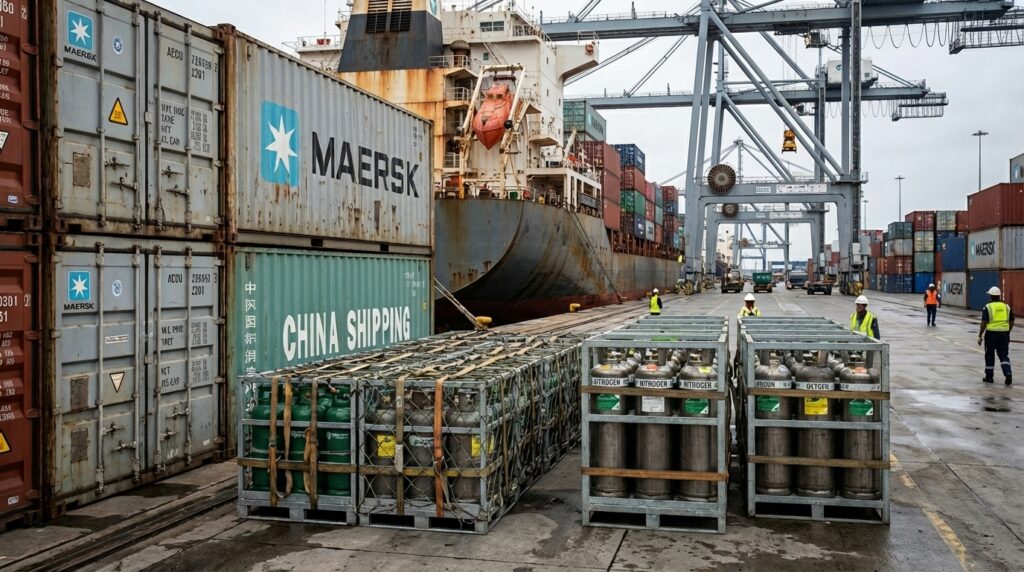
Our Global Export Capability
Phoenix Gases supports B2B supply planning for customers operating across regions and marine routes. We assist with structured order planning, documentation support, and packaging coordination based on shipment requirements. If your vessel or marine group operates across multiple ports, share the expected supply pattern. Our team will guide a practical dispatch and reorder approach to maintain continuity.

Ordering & Process
How to Order Phoenix Marino from Phoenix Gases
01
Share detector details

Send your detector brand and model, the target gases required, and whether you need bump testing or calibration. This helps Phoenix Gases recommend suitable standard mixtures and match them to your safety routine.
02
Select mixtures from the standard list

Choose from the Phoenix Marino standard list based on your detector requirements and onboard procedures. If you are unsure, share your application details and Phoenix Gases will recommend the closest suitable options.
03
Confirm can format and quantity

Select Marino 120, Marino 50, or Marino 20 based on usage frequency and storage constraints onboard. Confirm quantity and delivery preference so Phoenix Gases can plan availability and dispatch scheduling.
04
Receive quote and dispatch plan

Phoenix Gases shares the quotation with lead time and dispatch planning. Once confirmed, we proceed with supply coordination. For repeat programs, we can also support reorder planning to avoid last minute shortages.
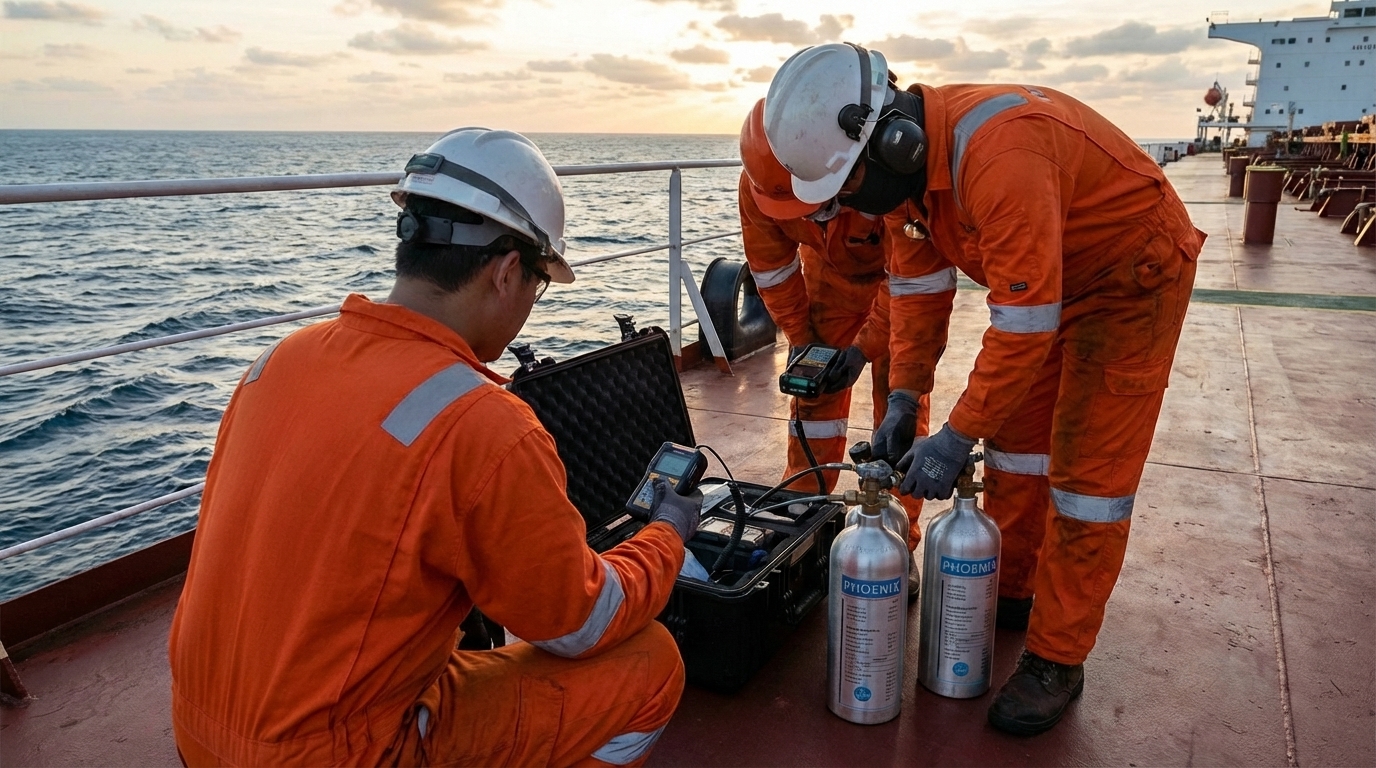
Why Marine Teams Choose Phoenix Gases
- Built for practical shipboard verification workflows
- Consistent packaging formats for routine programs
- Documentation support for safety logs and audits
- Suitable for marine detectors and onboard safety checks
FAQ
FAQs about Phoenix Marino
What is Phoenix Marino used for in marine safety?
Phoenix Marino is used for bump testing and calibration of marine gas detectors. It helps verify that detector sensors respond correctly before confined space entry, engine room work, or inspection routines. Portable disposable cans make onboard checks faster and easier. Share your detector model with Phoenix Gases and we will help recommend the suitable mixture options.
How do I choose between Marino 120, Marino 50, and Marino 20?
The choice depends on how often you test and how many detectors are onboard. Higher capacity formats suit regular programs and multiple detector units, while smaller formats suit quick checks and limited usage. Phoenix Gases can recommend the right format if you share your testing frequency, detector count, and storage limitations on the vessel.
What does reactive and non reactive mean for mixtures?
Reactive mixtures contain components that may interact with surfaces or degrade faster, so shelf life and handling planning becomes important. Non reactive mixtures typically offer longer stability for many routines. Phoenix Gases supplies both types depending on requirement. If you share the target gases and detector purpose, we can guide the most suitable mixture category for your routine.
Do Phoenix Marino supplies come with documentation?
Yes, Phoenix Gases supports supply with documentation that helps teams maintain consistency and confidence in calibration routines. Certificate accuracy, shelf life guidance, and identification support help safety officers maintain records. If you have an internal marine audit process, tell us your documentation needs and we will align the supply support accordingly.
Can Phoenix Gases support repeat supply planning for vessels?
Share your required mixtures and detector model today, Phoenix Gases will confirm availability and dispatch plan.
Need Phoenix Marino quickly for onboard safety checks?
Share your application, required composition, and delivery city today. Phoenix Gases will revert with the best mixture plan, documentation scope, and lead time so diagnostics and therapy programs remain uninterrupted.